Yesterday, 28 September 2025, the Swiss population very narrowly accepted a proposal on the Swiss E-ID. This is more than four years after the people declined an earlier proposal.
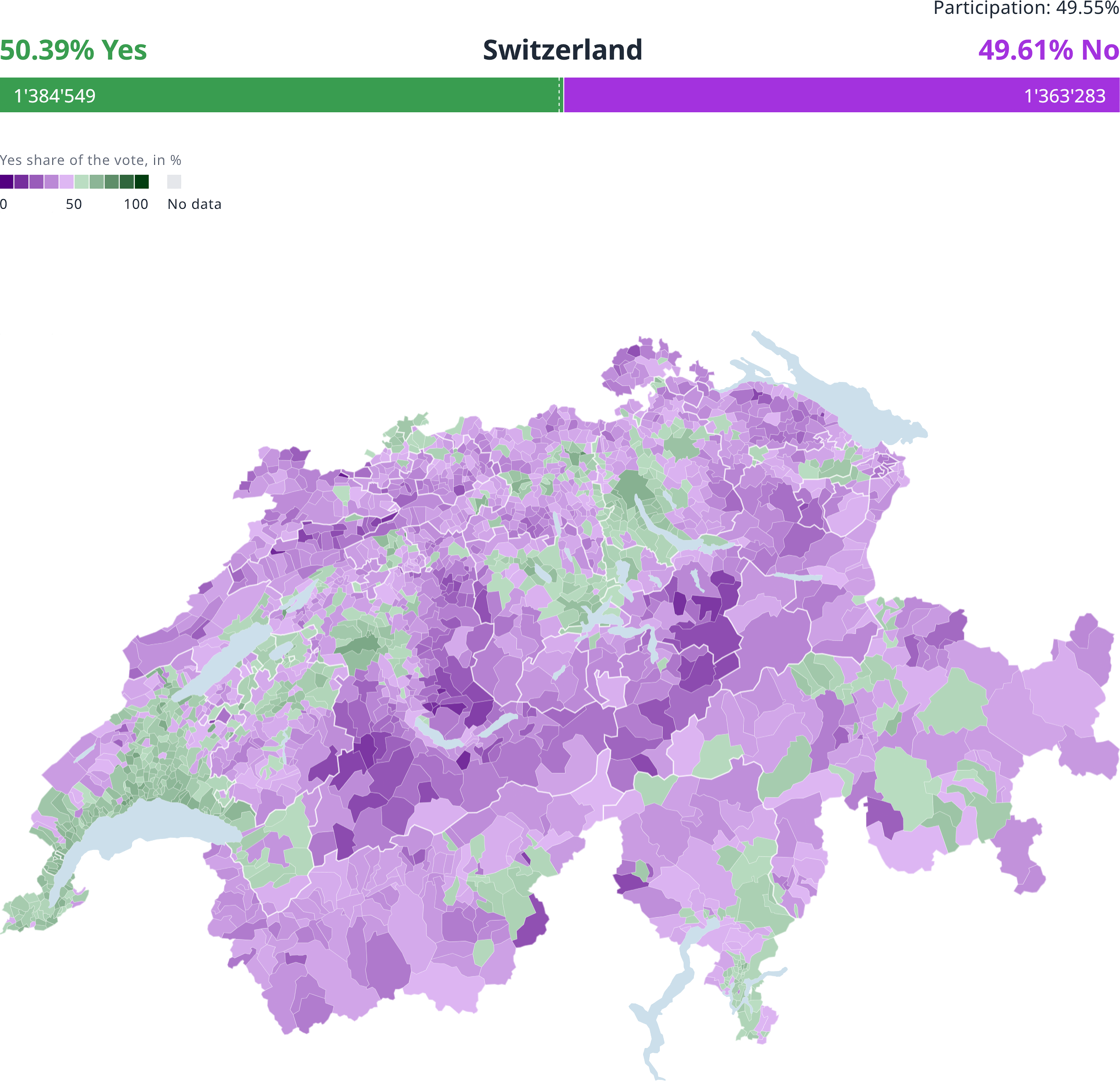
Provisional official final result for the vote on the Federal Act on Electronic Identification Services (e-ID Act). Source: Federal Statistical Office
The result was very narrow, perhaps indicating a feeling of unease about the prospect of an electronic identity in Switzerland. From a technical standpoint, I think the new proposal is much better than the first attempt. Identity checking and the management of identities are now a central service of a government office, not in the hands of private companies.
Let me be clear: I think an electronic ID is a necessity for any country, and I think the now-accepted proposal is a good idea that strikes the right balance between the need for privacy and the convenience I’m expecting. I also think that for quite a few applications, the normal physical ID card will still be necessary, and a digital ID is not the holy grail.
Technical stuff
The technical documentation is quite thorough and well worth a read. It describes technical details, such as the principles of data minimisation applied. It also describes how you would verify your details in person and via the web.
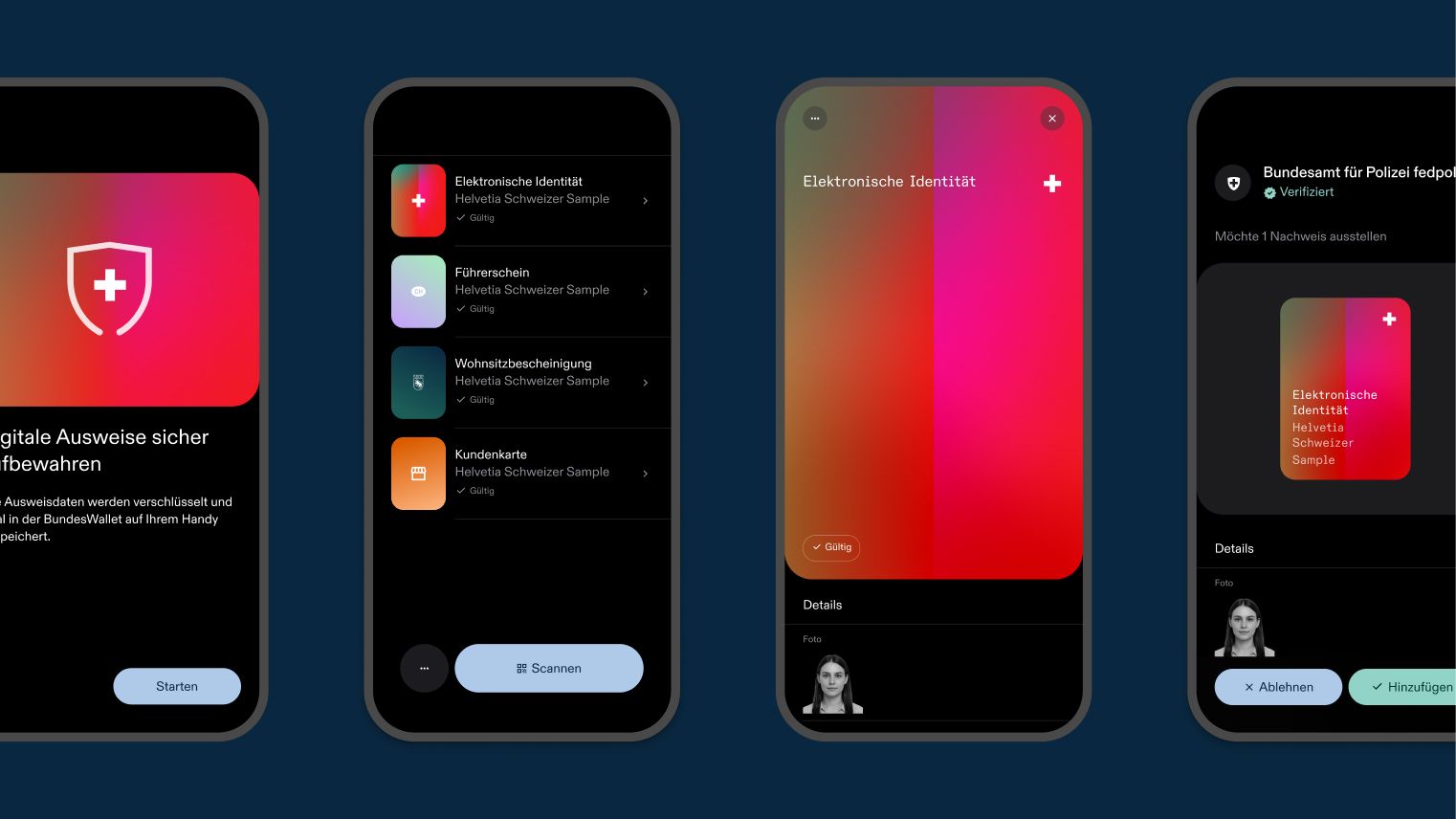
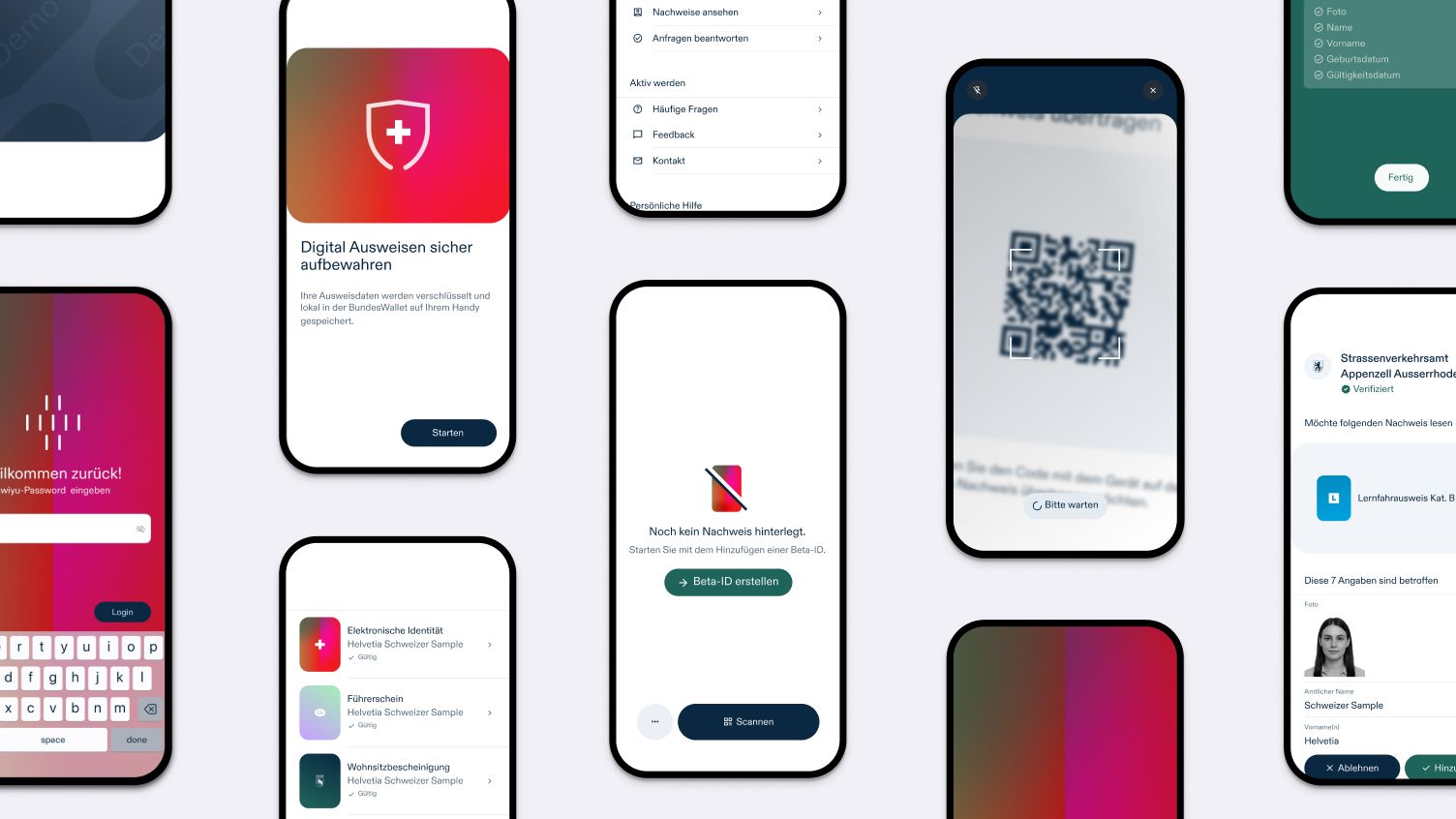
Demo screens of the swiyu app. Source: The Electronic Identity (e-ID) by The Federal Department of Justice and Police (FDJP)
Look, none of this is new in the world of IT. Proving your identity (not necessarily a government identity) online is mostly a solved problem. And being able to prove my age to someone without also having to share all my other personal information seems better for privacy than the current physical IDs we have. So I’m looking forward to getting a digital ID and starting to use it as well.
Dangers
When looking at the result, I see that many people in Switzerland were not happy with this solution. I assume that it is partly fear of new technology, which is fair enough. After all, people developing technology are often not that good at communicating its merits, and people are generally wary of change. Doubly so (the communication and the wariness) when it’s the government.
And around the world, privacy-invading age checks are becoming more and more common, frequently implemented by governments without much thought for privacy under the guise of “protecting the children.” And while protecting children is largely a good idea, I have become very sceptical about politicians bringing up that argument when making laws. It seems like protecting the children is often about applying a cheap fix, such as more surveillance, instead of addressing the issue at the root 1.
So, potentially, part of the vote was scepticism around political movements towards more surveillance. I hope that doesn’t happen in Switzerland, and if it does, we actually have a privacy-preserving solution to address this, which is better than what other countries are currently doing.
Conclusion
Overall, I think the digital ID is a good thing, and I’m happy about the result, even though it was closer than I wished.
I’m strongly convinced that, like any IT project by the federal government (does AGOV work properly now?), there will be some problems at the start. These issues will be solved, and we’ll get used to the digital ID more and more. In my opinion, this is a step in the right direction, and I’m eagerly awaiting being able to cross borders with just an electronic ID 2.
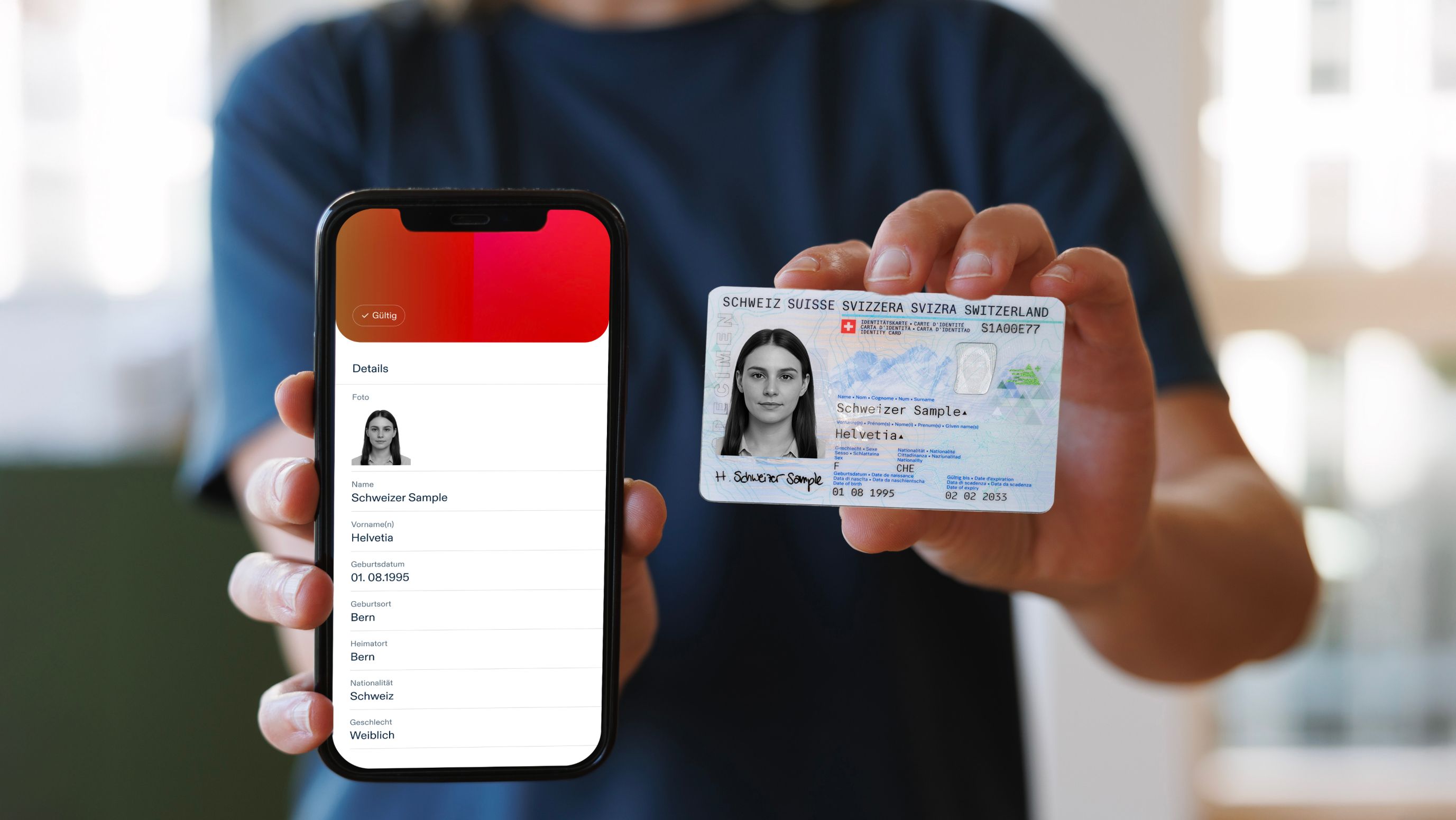
Digital and physical ID, soon to be a reality. Source: The Electronic Identity (e-ID) by The Federal Department of Justice and Police (FDJP)
Solving problems at the root requires a prolonged attention span and an in-depth understanding of the topic, something most politicians seem to lack. My proposal is that instead of forcing everyone to do age checks so children cannot access social media, it would be much better to give families the opportunity to do something better. Maybe by providing free childcare, or by having free things that families can participate in, or by giving money to sports clubs so every child can attend for free. Instead of building giant walls around social media (that kids will get around anyway; see you soon, future IT professionals), we should give them better alternatives. ↩︎
As someone who quite often used to cross the border without any ID card, I think authorities should be very happy to be able to check my ID now, because I will probably bring my phone with me. ↩︎