AI seems to be everywhere, and adoption appears to be quite high. While I’m generally sceptical that it’s going to change everything,1 it does seem to have some use in writing. I think the systems have improved a fair bit, especially for translation and proofreading.
I’ve used it, with varying success, to improve my writing-mostly for spellchecking. It also sometimes helps me write those dreaded business emails, where I’m somehow expected to be way more formal and far too courteous to bad ideas. I can write the points I’m trying to get across and then get some tips on how to improve them. Do I ever generate the entire email? No, of course not. I want it to have my style and my thoughts. But I have asked for feedback before, and that seems to work quite well.
Spam
So why doesn’t this work for spam? I don’t know.
It seems logical that spammers and phishers would have access to these tools. In fact, we know businesses are being targeted using some of the worst kinds of AI tools out there.2
But when I look at my spam, it still looks pretty terrible. And these are all examples I’ve received recently.
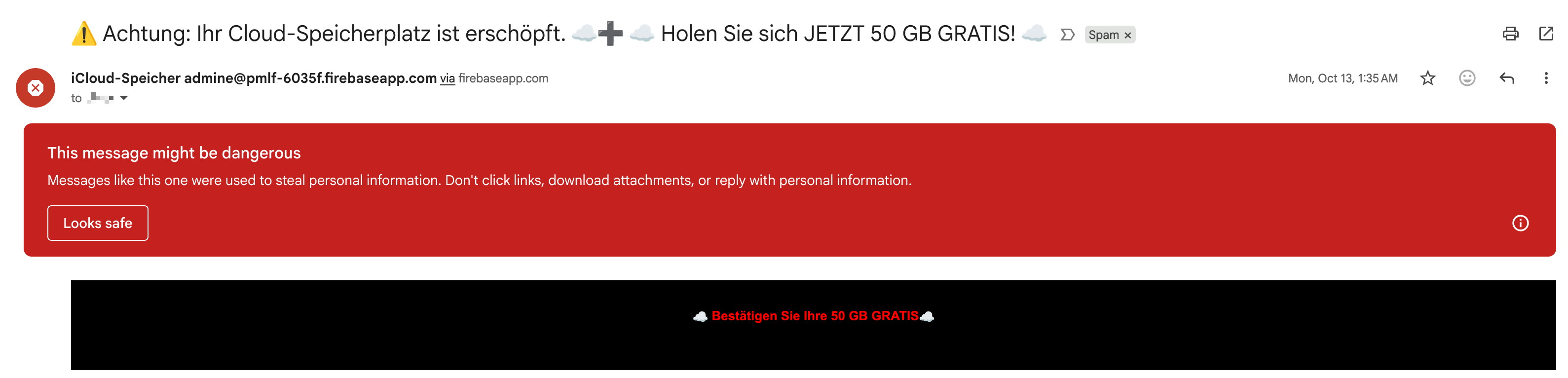
This looks like good old-school spam. I could probably use AI to generate an email that looks and sounds a bit like Apple, but this is so basic and broken. Also, that emoji in a subject line- even if it weren’t spam, I wouldn’t open an email with that many emojis (yes, unfortunately some companies insist on sending emails with emojis).
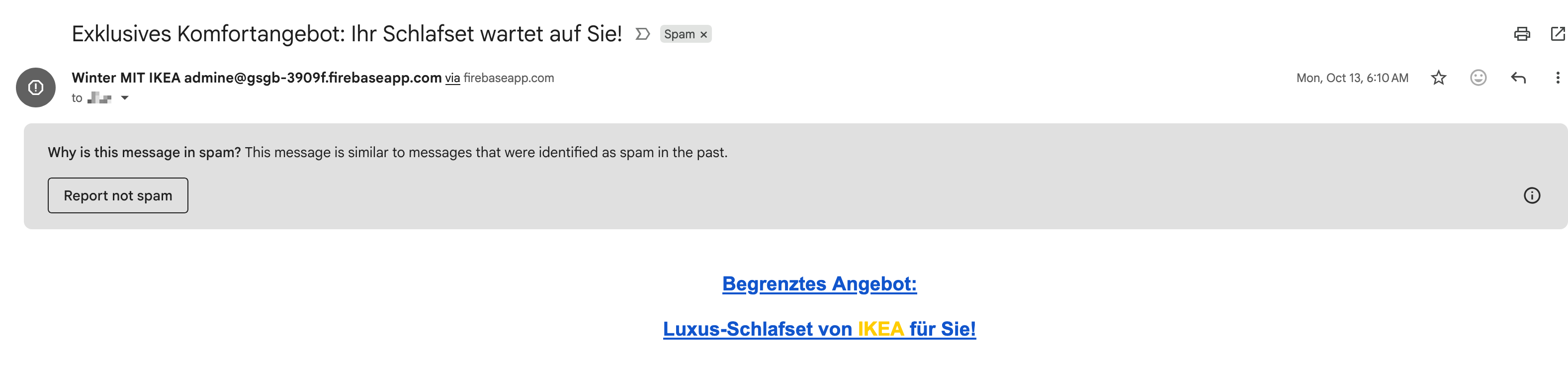
We all like to sleep comfortably. And kudos for getting the colours kind of right. But this also looks like an email that could never come from a real company. Again, it’s so blatantly obvious it almost feels like an insult to my intelligence. Maybe AI did help with the flawless German, but still, I don’t think it’s particularly effective.
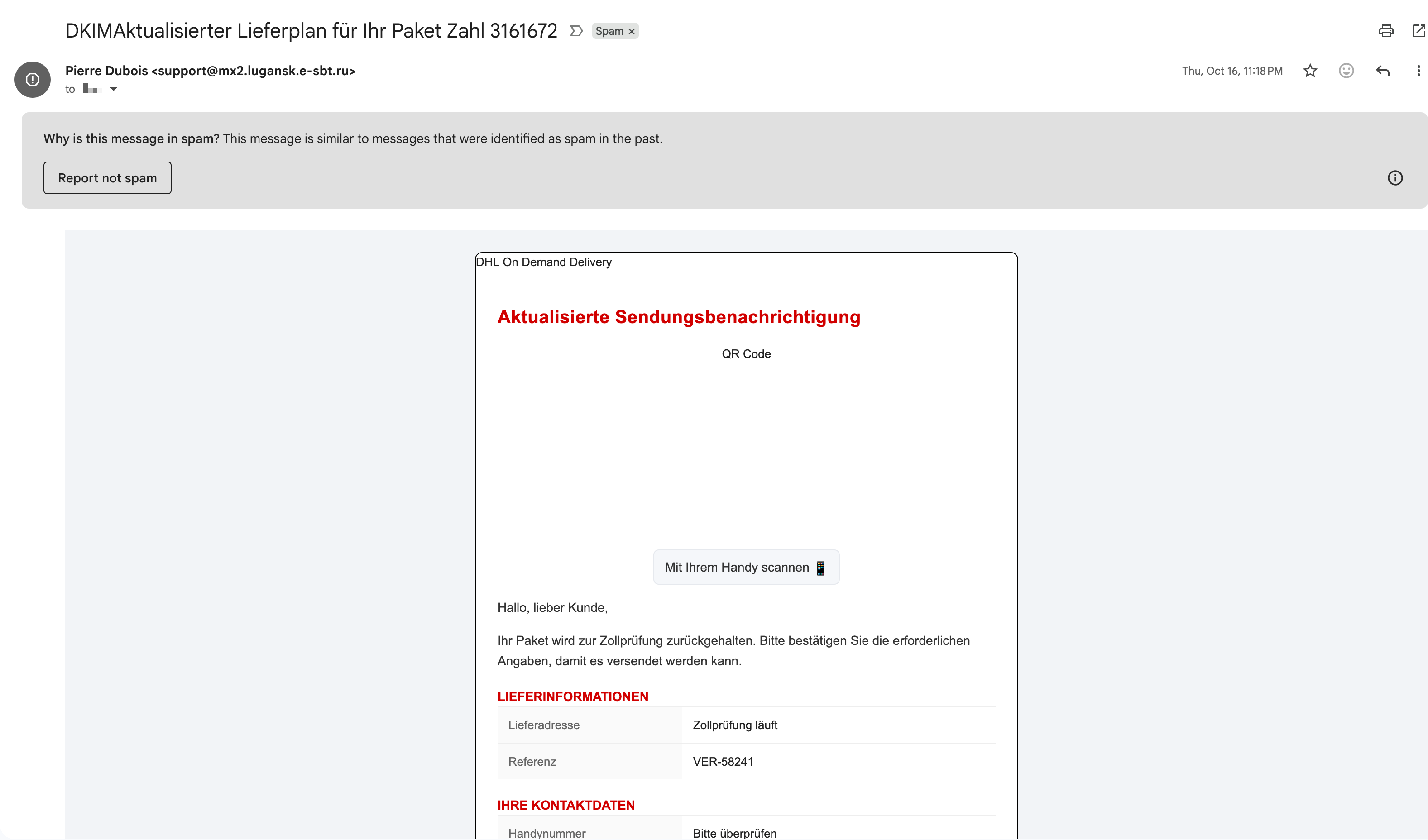
This email looks alright and is the well-known DHL package scam. If it weren’t for Gmail blocking it as spam, it might also show a logo and a QR code they want you to scan.3
But then, it doesn’t look like a real DHL reference number, and it doesn’t even say where it’s being sent, so how would I know?
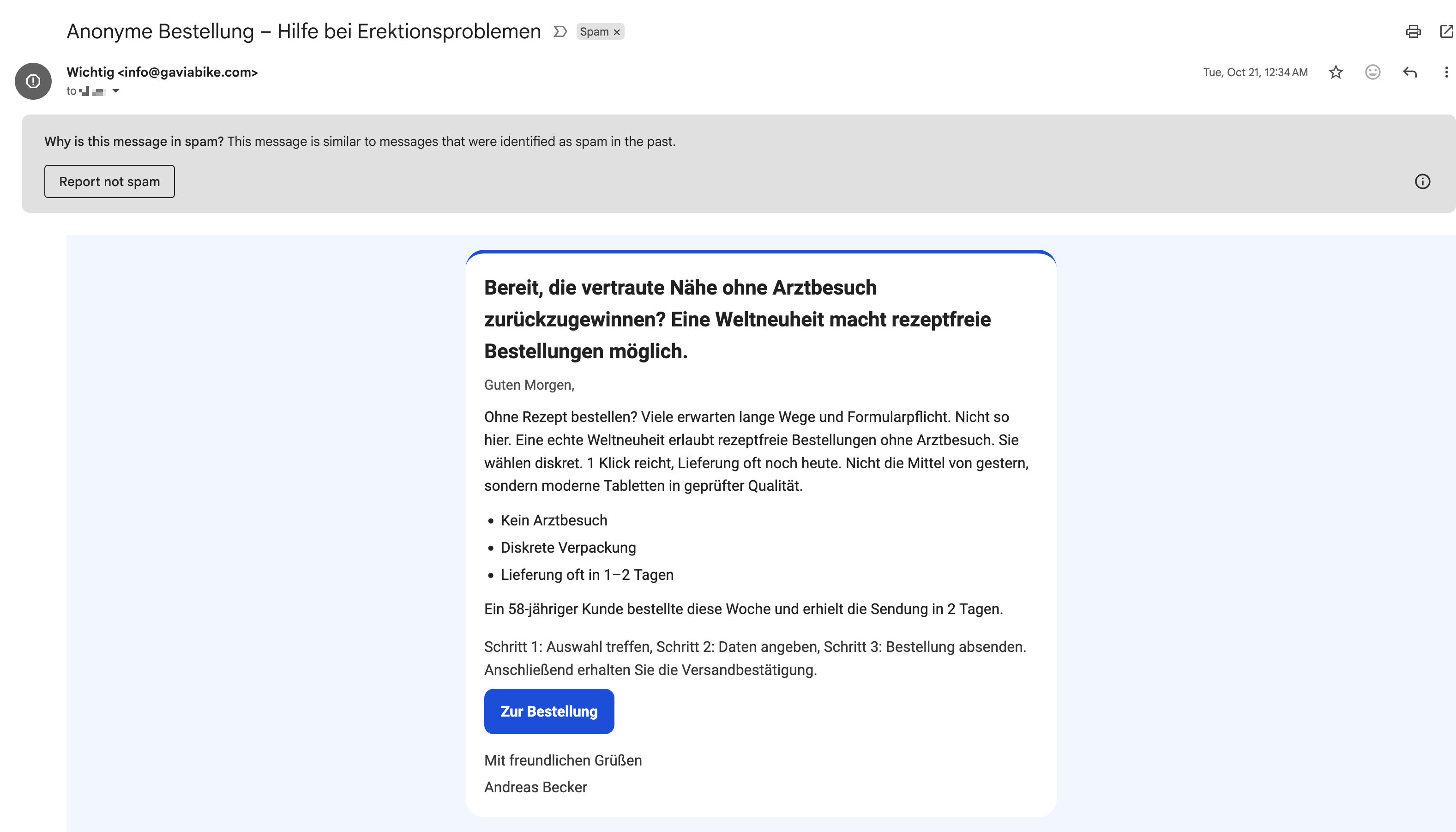
Perhaps the oldest spam around, the erectile dysfunction scam, also doesn’t seem plausible. While it looks a bit like a Google Form and the writing seems alright, it misses the point. In Switzerland, very few products are delivered the same day-especially medicine. That’s pretty much unheard of. And the writing, while grammatically correct, just sounds off. It’s not written like an advertisement, but like some strange multi-level marketing recruitment pitch.
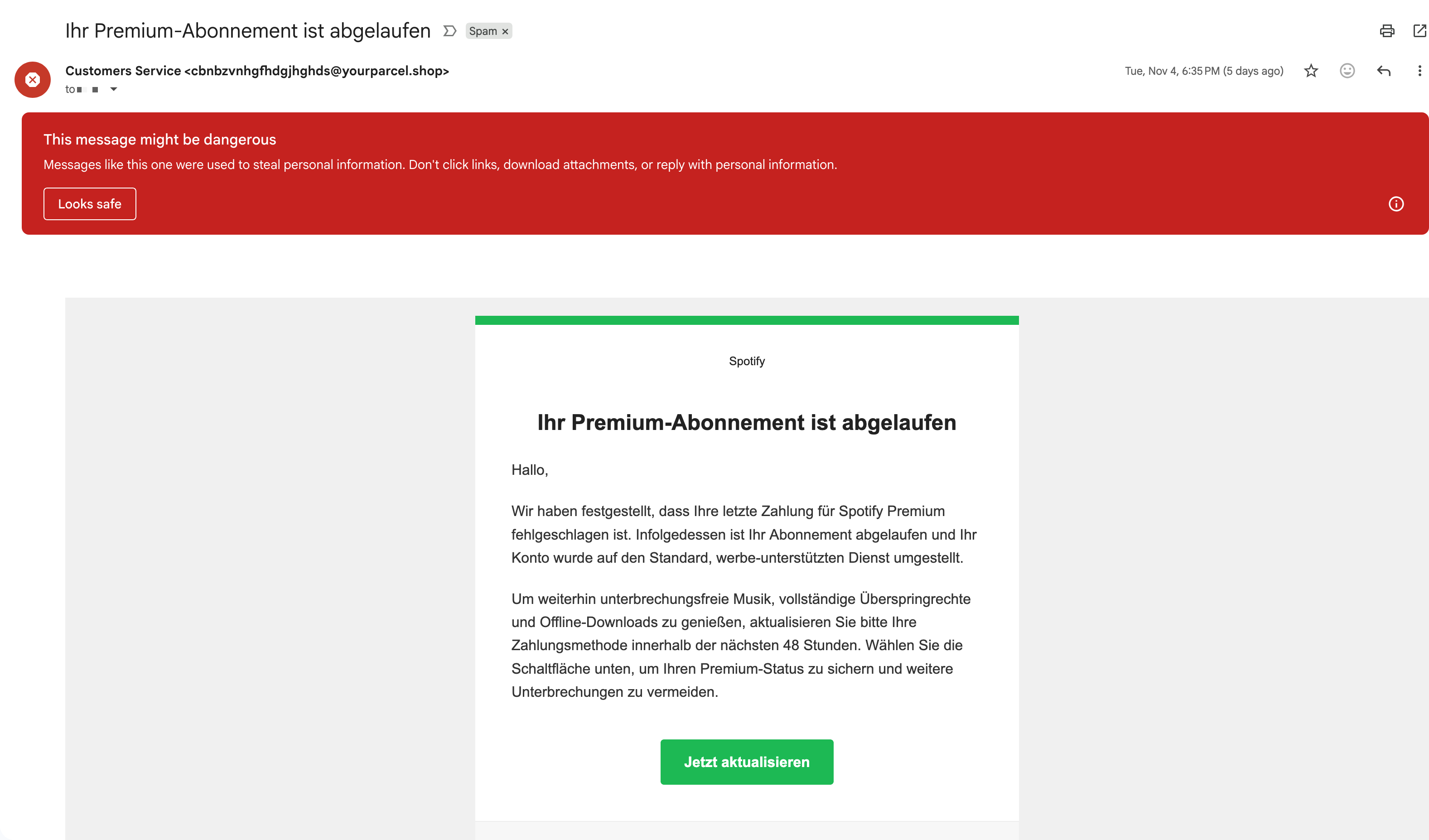
The missed Spotify payment isn’t very believable either. The content makes sense and mentions features that are part of Spotify’s Premium offer, but it reads like a clunky translation. The words are just a bit off, even when the sentences are technically correct. Also, the timeline makes no sense. The subscription has lapsed (apparently) and been changed to the free tier, but somehow the Premium features only disappear in 48 hours. It’s not logical and not good enough.
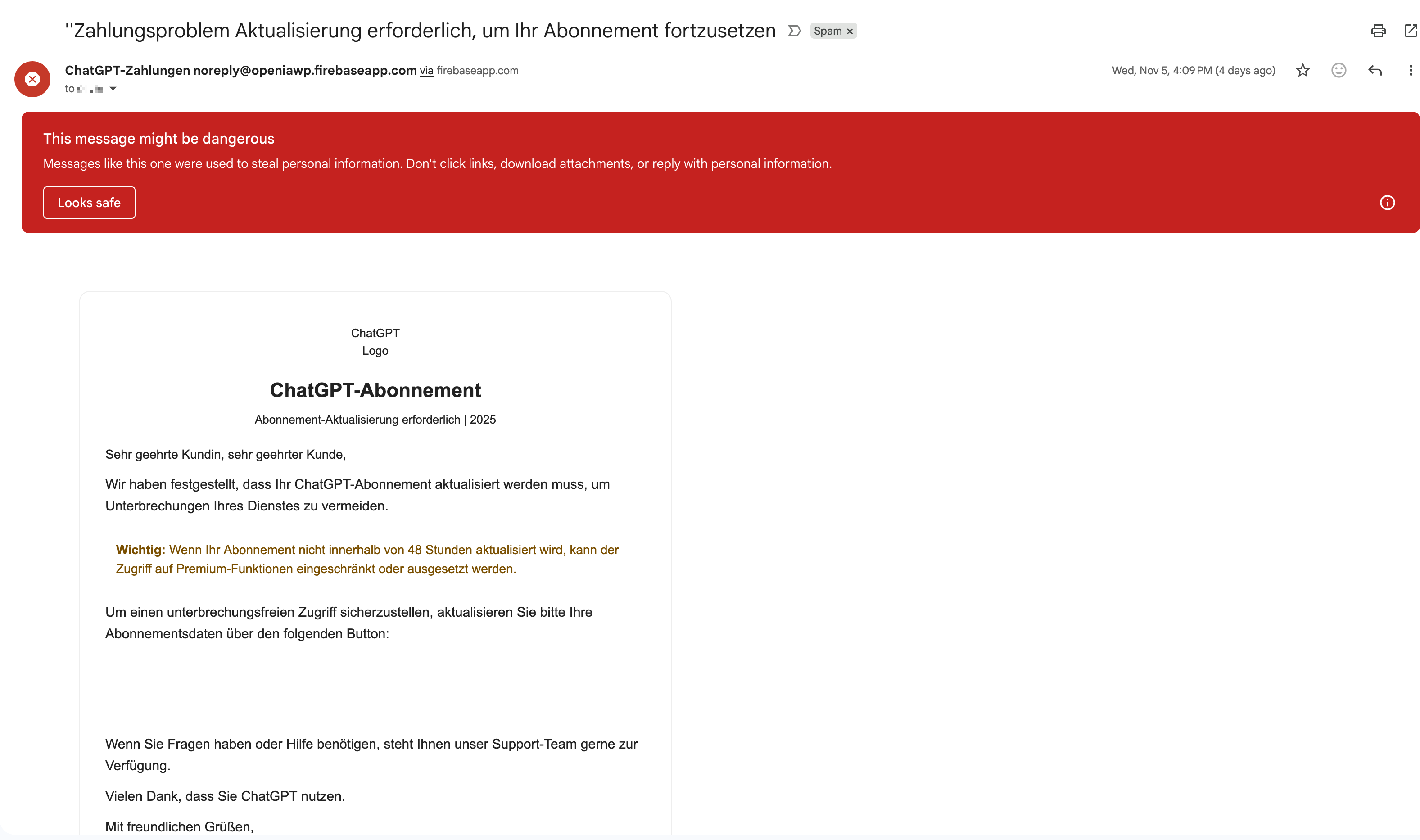
Kind of funny in this context, but my ChatGPT payment not going through isn’t very believable. The “2025” after the call to action seems weird. The sentences again feel a bit uncanny. Not grammatically wrong, just not very clear.
Conclusion
Look, it’s probably a good thing, and I’m happy I haven’t fallen for any of these yet. And I have no illusions-I could fall for one of these. But it is surprising that spam hasn’t improved with tools that everyone should have access to.
Maybe that’s still the strategy: write purposefully bad emails to catch people more likely to fall for a money scam later.
And no, I don’t think spammers should improve, but I’m very aware they have the tools to do so-and we should be prepared for that.
In fact, I strongly believe we’re currently in a bit of a bubble. As someone who uses it now and then and also understands the tech, I think there are only a few narrow applications for the current systems, but people are trying to use them for everything. Plus, it doesn’t seem like anyone knows how to make money with AI systems. ↩︎
They’re some of the worst tools produced by the current AI hype. I don’t see many legitimate applications outside a few limited, but still questionable, uses in film production. ↩︎
I’ve noticed lots of spam, phishing, and other scams use QR codes. Maybe people are less likely to check URLs in QR codes, but for me it’s almost the hallmark of a scam (or a bad restaurant) if there’s a QR code involved. ↩︎